
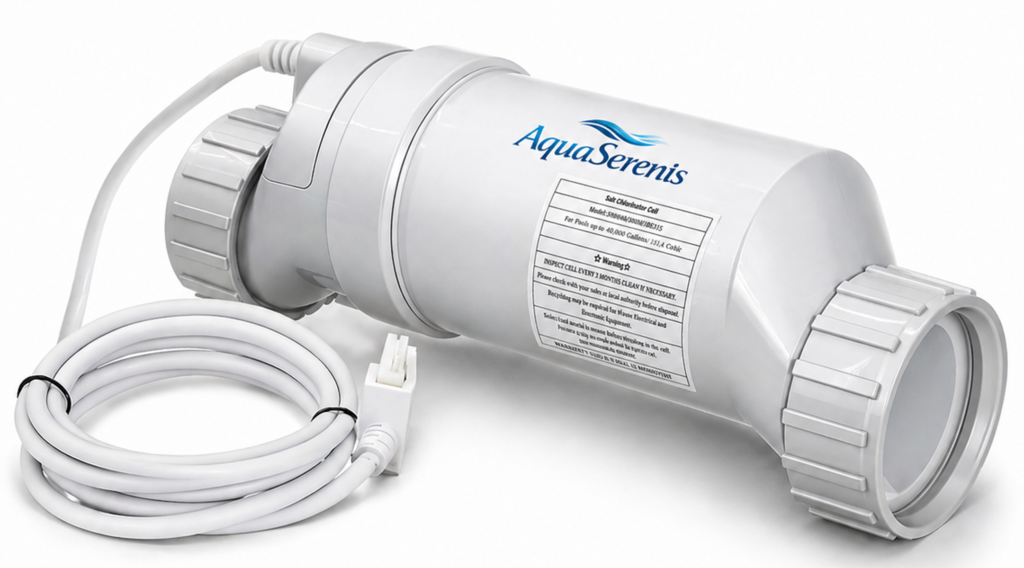
how to choose the right salt chlorinator for your pool
A pool salt cell is one of the most important parts of a salt chlorination system. It helps generate chlorine from dissolved salt in the pool water, supporting cleaner and more stable residential pool water when the system is operating properly.
Over time, a salt cell may wear down, collect scale buildup, or stop producing enough chlorine for the pool. When this happens, pool owners may notice low chlorine levels, warning lights, cloudy water, or more frequent system alerts.
This guide explains the common signs that your salt cell may need replacement, what to check before replacing it, and why compatibility matters when choosing a new salt cell.
What a Pool Salt Cell Does
A salt cell is the component inside a salt chlorination system that helps convert dissolved salt into chlorine. Water flows through the cell while the pool circulation system is running, and the chlorination process supports ongoing chlorine production.
The salt cell works together with the control unit, flow switch, water chemistry, salt level, and circulation system. If one part of the system is not working correctly, chlorine production may be reduced.
Because the salt cell plays such an important role, pool owners should inspect it regularly and watch for signs of reduced performance.
Common Signs Your Salt Cell May Need Replacement
A salt cell does not usually fail without warning. In many cases, performance declines gradually before the cell stops working completely.
Common signs include:
- Low chlorine levels even when the system is running
- Warning lights on the control panel
- “Check Cell” or similar alerts
- Heavy scale buildup on the cell plates
- Cloudy or green pool water
- Need for frequent manual chlorine
- Reduced chlorine output at normal settings
- Cell age beyond expected service life
- Error messages after cleaning and water balancing
These signs do not always mean the salt cell is bad. Salt level, water balance, flow, wiring, and control system issues can also affect performance. However, if the same problems continue after basic checks, replacement may be needed.
Low Chlorine Output
One of the most common signs of a worn salt cell is low chlorine output. If the system is set to normal or high output but the pool still shows low free chlorine, the salt cell may not be generating enough chlorine.
Before replacing the cell, check the basics:
- Salt level
- pH
- Stabilizer level
- Pump runtime
- Water temperature
- Cell cleanliness
- Flow through the system
If all of these are within the recommended range and chlorine output is still weak, the salt cell may be worn or near the end of its usable life.
For a broader overview of choosing a system, read our guide on how to choose the right salt chlorinator for your pool.
Warning Lights or Error Messages
Many salt chlorination systems use lights, display messages, or status indicators to show system conditions. If the control panel shows repeated salt cell warnings, inspect the cell and review the system manual.
Common alerts may relate to:
- Cell inspection
- Low salt
- High salt
- No flow
- Check cell
- Reduced output
- Communication or cable issues
A warning light does not automatically mean the salt cell needs replacement. Sometimes cleaning the cell, correcting salt level, or improving flow can clear the alert. However, if the warning returns after proper cleaning and water balance, the cell may need further testing or replacement.
Heavy Scale Buildup
Salt cells can develop scale buildup over time, especially when calcium hardness, pH, or water balance is not properly maintained. Scale can reduce chlorine generation and make the system work less efficiently.
Light scale may be cleaned according to the product instructions. Heavy or repeated scale buildup may indicate water chemistry problems, but it can also affect the cell’s long-term performance.
If the cell plates are heavily coated, damaged, or difficult to clean, the salt cell may not perform correctly even after maintenance.
Pool owners should avoid aggressive cleaning methods that may damage the cell. Always follow the product manual or consult a qualified pool professional when unsure.
Cloudy or Green Pool Water
Cloudy or green pool water can have many causes, including poor filtration, low chlorine, water imbalance, short pump runtime, or high organic load. However, if your salt chlorinator is not producing enough chlorine, water clarity problems may become more frequent.
If the water becomes cloudy even though the system is running, check:
- Free chlorine level
- Salt level
- pH and stabilizer
- Filter condition
- Pump runtime
- Salt cell condition
- Flow through the system
If chlorine remains low after these checks, the salt cell may not be keeping up with the pool’s chlorine demand.
Salt Cell Age
If you are still choosing the proper system capacity, read our guide on what size salt chlorinator you may need.
Salt cells are wear components. Their service life depends on water chemistry, usage, runtime, cleaning habits, climate, and system conditions.
A salt cell used frequently in a warm climate or heavily used pool may wear faster than one used under lighter conditions. Poor water balance, high scale formation, and constant high-output operation can also shorten cell life.
If your salt cell is several years old and performance has dropped, replacement may be more likely, especially if cleaning and water balancing no longer improve output.
Check Compatibility Before Replacing a Salt Cell
Before purchasing a replacement salt cell, compatibility is critical. Salt cells that look similar may not work with the same control system.
Check these details before buying:
- Original salt cell model
- Control unit model
- Cable and plug type
- Union or plumbing connection size
- Flow direction
- Pool capacity rating
- Required salt level range
- System voltage and installation requirements
Choosing the wrong salt cell can lead to installation problems, error messages, poor performance, or system incompatibility.
You can also review AquaSerenis pool equipment categories on our Products page before choosing a replacement part.
When Cleaning May Be Enough
Not every salt cell issue requires replacement. In some cases, the cell may only need cleaning or the water chemistry may need adjustment.
Cleaning may help if:
- There is visible scale buildup
- Chlorine output has dropped recently
- The system shows a check cell alert
- The cell plates are coated but not damaged
- Water chemistry has been corrected
After cleaning, test the water again and monitor chlorine output. If performance improves, replacement may not be needed immediately.
However, if cleaning does not help, or if the same warning returns quickly, the cell may be worn or damaged.
When Replacement Is More Likely
Salt cell replacement becomes more likely when performance problems continue after basic maintenance.
Replacement may be needed if:
- Chlorine output remains low after cleaning
- Warning lights continue after water balance is corrected
- The cell is old or heavily worn
- Plates appear damaged or deteriorated
- The control system repeatedly shows cell errors
- The pool requires frequent manual chlorine despite normal operation
- The cell fails testing by a qualified pool professional
If you are unsure, collect your product model, part number, and clear photos before contacting support.
When to Ask for Support
If you are not sure whether your salt cell needs replacement, contact AquaSerenis support before purchasing. Include as much information as possible so compatibility can be reviewed.
Helpful information includes:
- Original salt cell model
- Control unit model
- Part number
- Photos of the cell label
- Photos of the control panel
- Photos of cable connections
- Current warning lights or error messages
- Pool volume and system type
You can contact AquaSerenis support if you need help reviewing compatibility before purchase.
Final Thoughts
A salt cell may need replacement when it can no longer generate enough chlorine, shows repeated warning alerts, has heavy buildup or wear, or continues to perform poorly after cleaning and water chemistry checks.
Before replacing a salt cell, pool owners should first check salt level, water balance, flow, pump runtime, and cell cleanliness. If problems continue, replacement may be the right next step.
The most important part of choosing a replacement is compatibility. Always compare the original model, part number, control system, cable type, and connection requirements before purchasing.
Frequently Asked Questions
How do I know if my salt cell is bad?
A salt cell may be bad if chlorine output remains low after cleaning, water balancing, and checking salt level. Repeated warning lights, visible wear, and continued need for manual chlorine may also indicate a failing cell.
Can I clean a salt cell instead of replacing it?
Yes, if the issue is caused by scale buildup, cleaning may help restore performance. However, cleaning will not fix a salt cell that is worn, damaged, or at the end of its service life.
Why is my pool still low on chlorine after replacing the salt cell?
Low chlorine can also be caused by incorrect salt level, poor water balance, short pump runtime, strong sunlight, dirty filters, heavy pool use, or control system issues. Check the full system before assuming the replacement cell is the problem.
Can I replace only the salt cell?
In many systems, the salt cell can be replaced separately if the control unit is still working properly. The replacement cell must be compatible with the existing control system, cable connection, and plumbing setup.
Do aftermarket salt cells work?
Aftermarket salt cells can work when they are correctly matched to the original system requirements. Before choosing an aftermarket replacement, confirm model compatibility, connection type, pool capacity rating, and installation requirements.